Small Charities Aren't Failing. The Funding System Is.
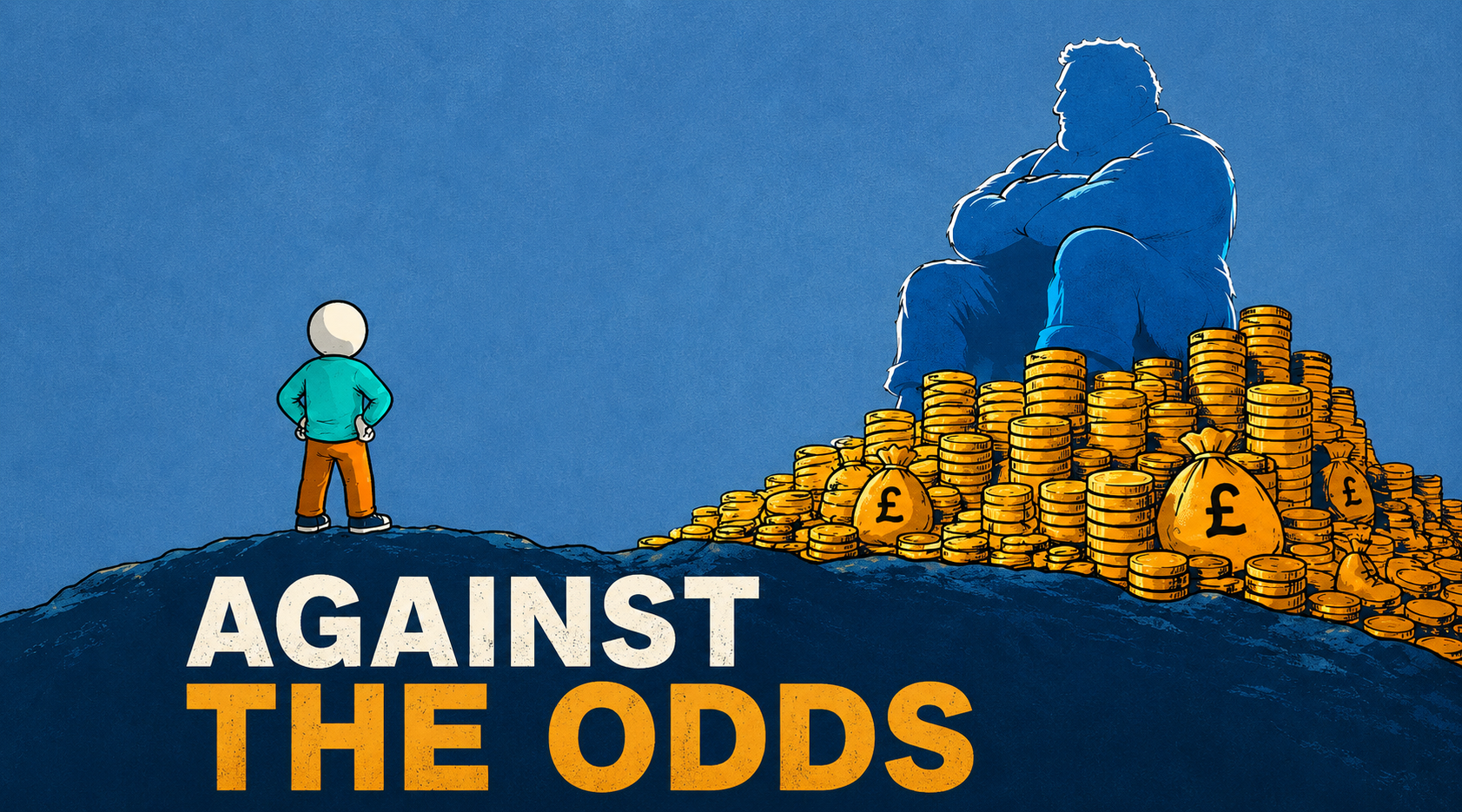
Against the odds.
Let's start with a story.
Someone came to a small charity at one of the lowest points of their life. Their community rallied around them. The support they received wasn't just practical - it was personal. And somewhere along the way, something changed. That person didn't just recover. They came back. Became a volunteer. Started giving back to the very community that caught them when they fell.
That's not a programme outcome. That's what genuine proximity looks like.
And yet, despite stories like this playing out every day, small charities remain chronically under-valued. According to the Centre for Social Justice, 79% of UK adults believe small, local charities are under-resourced and overlooked - and yet 76% agree they know their communities better than any national organisation ever could.
The funding doesn't reflect that.
For small charities across the UK, that disconnect isn't just frustrating. It's existential.
You're closer than they'll ever be
Large charities do important work. But they operate differently - broader reach, bigger infrastructure, national scope. Small charities do something else entirely. They're woven into the fabric of a specific place and a specific community in a way that simply can't be replicated at scale. This is the distinct advantage of small charities.
When you serve your community, you're serving your neighbours. Your friends. People whose struggles you recognise, whose lives you're genuinely invested in. Not because it looks good in an annual report. Because it matters to you personally.
That kind of trust isn't transferable. It can't be parachuted in. Nothing builds it faster than simply showing up, consistently, for years.
Where the small charity funding system quietly fails you
Here's the part that doesn't get said enough. Small charities are often penalised for already doing the work.
The numbers tell a stark story. According to the Charity Commission's own Annual Return Analysis, just 2.6% of charities account for 75% of all sector income. Meanwhile, small charities - the rooted, community-embedded ones running on commitment - collectively reported a £290m deficit last year. Larger charities are reporting surpluses. Smaller charities are running out of road.
And it goes further. Proportionally twice as many larger charities receive government grants compared to smaller ones. Not because the work is better. But because the brand is bigger.
Funders want something novel. Something innovative. A shiny new project with broad reach and a compelling pitch that they can promote in their own annual reports. What they struggle to fund is a service that's already running, already working, already changing lives - one that simply needs sustainable support to keep going.
So the grant goes elsewhere. Meanwhile you're delivering real impact, with real relationships, on a fraction of the resource. What's more, the people who need you most are still finding their way to your door.
That's not a funding gap. That's a structural problem.
The story you're not telling
There's a moment - you probably know the one - that never made it into your communications. Something too raw, too real. It felt too distressing to share. Too desperate.
But that story might be the most important one you have.
Not because donors want to feel sad. But because most people genuinely don't understand what disappears when a small charity closes. They assume the status quo resumes. Someone else steps in.
They don't.
What fills that void isn't another service. It's silence. A community that gradually stops looking out for itself. People struggling alone, not knowing where to turn, until they reach breaking point with no one there to catch them.
That's what small charities prevent. Every single day.
So where does that leave small charities?
The answer isn't to chase every funding opportunity or try to be everything to everyone. It's to get precise — about who you serve, what you do better than anyone else, and how you tell that story.
It means finding funders who actually get it. Who want to understand the people behind the numbers, who see the value in keeping something rooted and real, and who are willing to fund sustainability — not just novelty. Those funders exist. They're just not always easy to find.
And it means working with people who understand your world. Who know how to reach the right supporters, frame the right stories, and help you build something sustainable — without asking you to become something you're not.
The bit that matters most
You don't need to win the grants race.
You need the right people in your corner. Funders who understand your community. Supporters who believe in your work. Partners who know how to help you reach them.
The void you fill isn't a gap in service provision.
It's the difference between a community that holds together and one that quietly falls apart.
You and your team are giving everything. That's not the problem. The problem is a system that keeps asking for more without giving anything back.
That's an exhausting place to lead from.
The charities that find a way through aren't the ones that work harder. They're the ones that get ruthlessly clear on what matters - and stop spending energy on everything else.
If you're at that point. Drop us a message at hello@charityfocusconsulting.co.uk
No pitch. Just a conversation.
---
Charity Focus Consulting works alongside small charities on strategy, income generation, marketing and volunteering - as connected support, not separate services. If this resonated, there's more at www.charityfocusconsulting.co.uk
---
Sources: Centre for Social Justice, Overlooked and Underserved; Charity Commission Annual Return Analysis 2024, published March 2026.